About Clinical Pastoral Education International (CPE)

Clinical Pastoral Education International (CPEI) was founded in 2018 with the express intent of meeting educational standards set by the U.S. Department of Education. The field of chaplaincy is changing rapidly. If you hear someone suggest that only one kind of CPE is acceptable, it is worth exploring further where they got that information and if it may be based on outdated ideas that may deserve reconsideration.

CPEI is accredited by the Distance Education Accrediting Commission (DEAC), which is listed by the U.S. Department of Education as a recognized accrediting agency and recognized by the Council for Higher Education Accreditation (CHEA).

CPEI is accredited by the International Accreditors for Continuing Education and Training (IACET) as a Continuing Education Unit provider and may offer IACET CEUs for eligible learning activities.

The Association of Professional Chaplains (APC) and its Board of Chaplaincy Certification, Inc. (BCCI) have approved CPEI as a provider of Clinical Pastoral Education toward BCCI chaplain certification (since January 2024).

The National Association of Catholic Chaplains (NACC) recognizes CPEI Clinical Pastoral Education units toward NACC chaplain certification (since January 2024).

Federal recognition:

  • The National Association of Veterans Affairs Chaplains has confirmed acceptance of CPEI’s accredited Clinical Pastoral Education units within its professional chaplaincy pathway.
  • U.S. Department of Veterans Affairs. CPEI is approved to offer VA education benefits to eligible veterans, active-duty service members and other qualified individuals enrolled in approved CPE and SEC programs.
  • See also DEAC accreditation which relates to recognition by the U.S. Department of Education.
  • CPEI is incorporated in Florida and recognized by the Internal Revenue Service as a tax-exempt 501(c)(3) nonprofit organization.

CPEI is an active member of the COMISS Network, which supports collaboration among organizations committed to theological and clinical education and the competent practice of interfaith spiritual care.

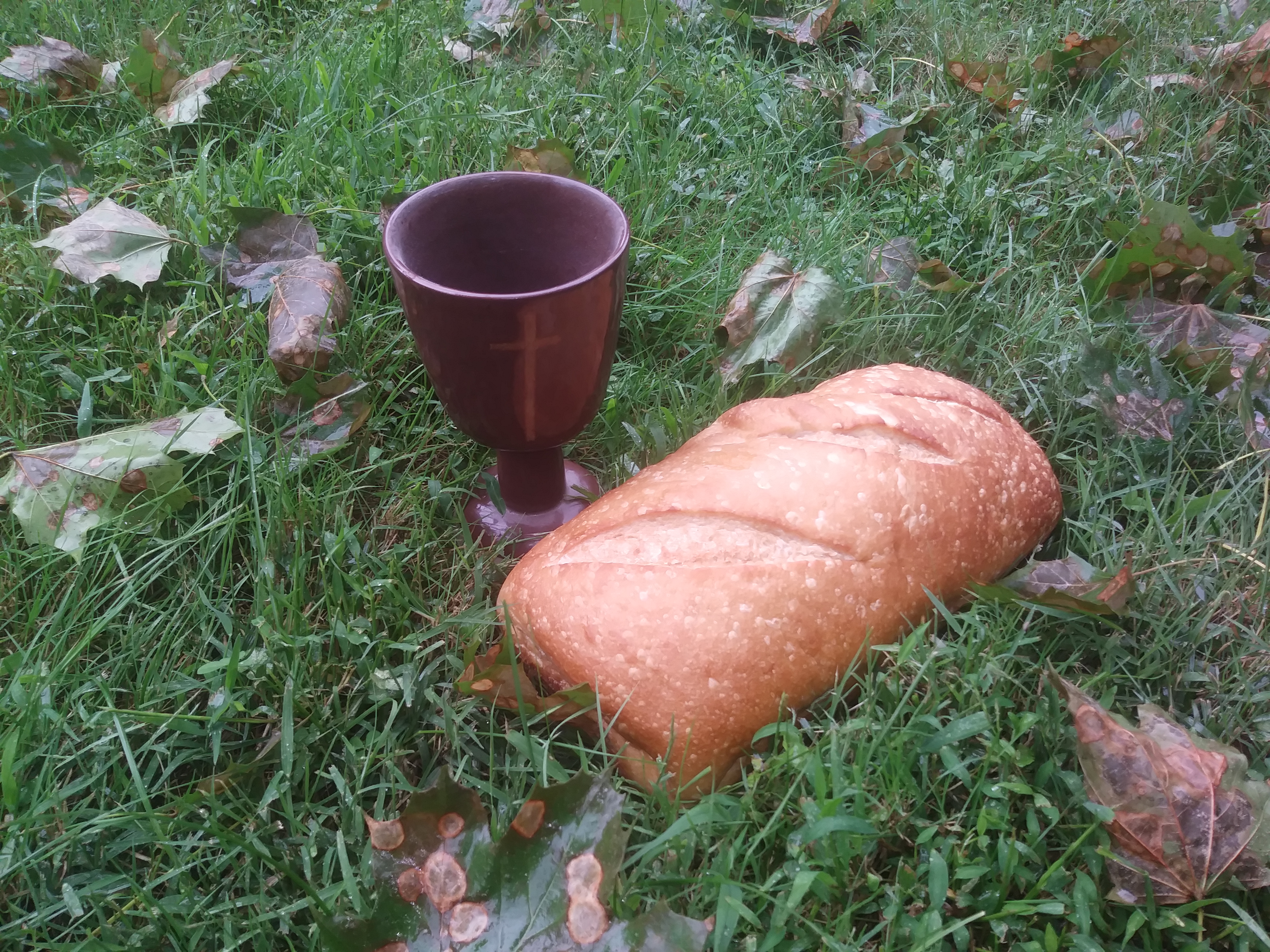
About Clinical Pastoral Education

Clinical Pastoral Education is experiential education for people who want to grow in spiritual care, reflective practice, compassionate presence and skilled support for others in real-life settings. It is the standard training process for clinical chaplains, but also serves clergy and other caring professionals interested in this kind of personal development work.

CPE uses a reflective and relational learning model. Students participate in small-group learning, individual supervision, online learning modules, written reflection, evaluations and supervised practice. The educational process emphasizes action, reflection, feedback and continued application of learning.

Like most CPE programs, CPEI training includes 300 hours of clinical experience paired with 100 hours of educational and seminar engagement.

The scope practice for clinical chaplains includes but is not limited to provision of religious services. A clinical chaplain is a spiritual health clinician, often working within an interdisciplinary context around a variety of psycho-spiritual concerns, including grief and loss, spiritual and existential concerns, meaning-making and struggle around illness or other life transitions. While each individual has their own individual beliefs, clinical chaplains are prepared to be of service to anyone with or without a religious perspective.

Land Acknowledgement

I am U.S. citizen of Dutch and French-Canadian descent, who has spent more than half my life living as a resident-guest in the watershed of the Lenape Sipu—renamed the Delaware River by the English.

Map credit: user Nikater, https://commons.wikimedia.org/wiki/File:Lenape_Languages.png

Yet, the Lenape people have cared for this land and this watershed since time immemorial. Indeed, they are honored as the “grandfathers” or “ancient ones” by indigenous people across Turtle Island. And, to paraphrase the Rev Dr John Norwood of the Nanticoke Lenni-Lenape Nation, [they] “are still here“–offering a living testimony, not just a historical memory.

I am, personally, grateful to Chief Bob Red Hawk, now Chief Emeritus of the Lenape Nation of Pennsylvania, for all the ways he has taught me about caring for our histories, for the land, and for all our relations. Waneshi.

Related Projects by Mx Chris Paige:

Some Leaders/Educators of note in Lenapehocking:

  • Rev Dr John Norwood
  • Curtis Zunigha
  • Chief Mark Gould (now retired)
  • Chief (now Emeritus) Robert Red Hawk

Recognized Tribes in New Jersey

The politics of recognition are quite complicated:

➢ Delaware Tribe of Indians (Bartlesville, OK, USA)
➢ Delaware Nation of Oklahoma (Anadarko, OK, USA)
➢ Stockbridge-Munsee Band (Bowler, WI, USA)
➢ Delaware Nation at Moraviantown (Thamesville, ON, Canada)
➢ Munsee-Delaware Nation (Munsey, ON, Canada)

From Confusion to Confidence

A “Choose Your Own Adventure”* Guide to Gender in the 21st Century with Mx Chris Paige

30 to 90 minute session

This experience is designed to be a highly adaptable, introductory, interdisciplinary, interactive experience to metaphorically “open doors and windows” toward more in-depth and less anxious conversations about gender in the 21st century. It can be deployed as

  • an Ethics Committee educational session
  • a Clinical Pastoral Education didactic,
  • a Board of Directors orientation to issues of gender,
  • or as some other kind of faculty, staff, volunteer, or student training experience.

More time allows us to air more feelings (incl. anxieties, curiosities, internal conflicts) and go deeper as we hear what questions and concerns are most alive in the room, but the framing is the same.

Mx Chris Paige is an openly nonbinary and transgender chaplain educator with more than two decades of grassroots experience in transgender religious organizing. They are doing advanced work in clinical pastoral education and medical humanities and will be prepared to engage briefly in a variety of “Choose Your Own Adventure”* topics, depending on the needs of the group as they emerge in conversation.

Some of what typically occurs in these unscripted conversations will feel like traditional education with theoretical scaffolding provided, while other parts of the encounter may be more of a “holy disruption” as we explore assumptions, anxieties, and personal experience in our responses to one another. This experience also functions as an assessment which can lead to follow-up sessions as appropriate to your setting and needs.

Please inquire for more information and availability. Mx Chris is based in central New Jersey /Eastern time zone and available by Zoom.

*Inspired by but neither endorsed by nor affiliated with the Bantam Books/Random House/Chooseco “Choose Your Own Adventure” brand, which I grew up on!

Transgender Day of Remembrance and more

Transgender Day of Remembrance (TDOR) is a complicated observance, but one that is key to understanding much about transgender communities. Mx Chris has done a variety of work around how trauma and systemic violence impact transgender folk.

Book

  • In Remembrance of Me: Bearing Witness to Transgender Tragedy (2020) [Learn More]

Blog Entries at OtherWise Christian

Liturgy

Animist with Christian Ancestry

Animist with Christian Ancestry

Mx Chris identifies as an ethnic Calvinist. They were baptized into the Christian Reformed Church–which tends to be an especially Dutch, European-American tradition. Mx Chris was confirmed in the Presbyterian Church (U.S.A.) and ordained as an elder at Tabernacle United Church (Philadelphia, PA) which is P.C.U.S.A. and United Church of Christ. In other words, they have been deeply shaped from birth in white Reformed/Calvinist Christian traditions.

That said, Mx Chris has had a journey from those roots into both ecumenical Christian community and into multi-faith community. Black Church Christianities have been an important part of Mx Chris finding a more embodied and liberationist faith experience. Also, Jewish, Buddhist, Muslim, and Indigenous friends and colleagues have had a huge impact in terms of expanding Mx Chris’s approach to both spirit and creation.

The language around “Animist” may mean a variety of things in different contexts (e.g. academic discussions). For Mx Chris, it means prioritizing respectful relationship, not only with living humans, but with human ancestors and the children yet to come, with tree people and plant people, with water people and rock people, with four-legged and winged ones. Dr. Daniel Foor has been a helpful teacher for Mx Chris in claiming this identity as their own. [Learn More]

As an Animist thinking about ancestral traditions, Mx Chris then recognizes that Christianity is a huge part of their lineage. Chris does identify as a “Witness to the Resurrection.” However, they have found liberation in no longer arguing with various definitions what it means to be “Christian” and instead leans into an Animistic framework for engaging Christian tradition. They also find this to be a useful way to variously acknowledge and appreciate that other ancestral traditions and cultural lineages have also had an impact on them.

If you press Mx Chris for beliefs, you may hear agnostic or non-theistic perspectives. Yet, they are fluid enough to use cultural repertoire around God language as well. They are (re)learning to read Christian scripture in a more multivocal way from Jewish friends and colleagues, but also honor other sacred text (e.g. Audre Lorde’s Sister Outsider is one example). Practices that emerge from Daoist lineages support Mx Chris in seeking health and balance. They are increasingly more concerned with embodiment and relationship than with belief (especially dogmatic belief systems).

Mx plus They and Zey pronouns

Mx Chris identifies as OtherWise, non-binary, and transgender. They do not identify as male or female, man or woman. They cringe when well-meaning people use “brothers and sisters” without recognizing that it is not a fully inclusive phrase. Mx Chris appreciates more inclusive words like “siblings.” [Learn More]

Mx Chris uses “Mx” as a title, because they often spend time with folk who use titles and honorifics like Reverend or Mother or Brother. Using “Mx” helps put their gender identity out in front as a reminder and also claims the kind of dignity and respect that is often offered in a more gendered way (e.g. Miss, Brother, Mother).

Mx Chris started using they/them pronouns after a conversation with a friend about the Genesis 1 creation narrative and that early use of “they/them” language around the Imago Dei, image of God. Zey is an alternate (neo-pronoun) invented by Chris’s daughter to avoid the intermediate school grammar police.

You can read more about using they-singular pronouns and also the title prefix “Mx” on the OtherWise Christian blog:

More Resources

  • Beyond Brothers and Sisters (2BOtherWise blog)
  • Mx Chris participated in a 2020 TransOhio panel with several non-binary people, which provides a diverse and in-depth treatment that goes beyond the basics.
  • Also, I appreciate Avery Smith’s treatment of Neo-Pronouns. which is available on YouTube. They even pick up on the Zey segment from OtherWise Christian.

Trivia

  • I recently discovered that I am mentioned on the Non-Binary Wiki with a definition of “OtherWise”!
  • While the survey was anonymous, my response to “gender not listed here” was included in the title of the paper, “A Gender Not Listed Here: Genderqueers, Gender Rebels, and OtherWise in the National Transgender Discrimination Survey” (by Jack Harrison, Jaime Grant, and Jody L. Herman in the LGBTQ Policy Journal at the Harvard Kennedy School, Vol 2). [Learn more]